

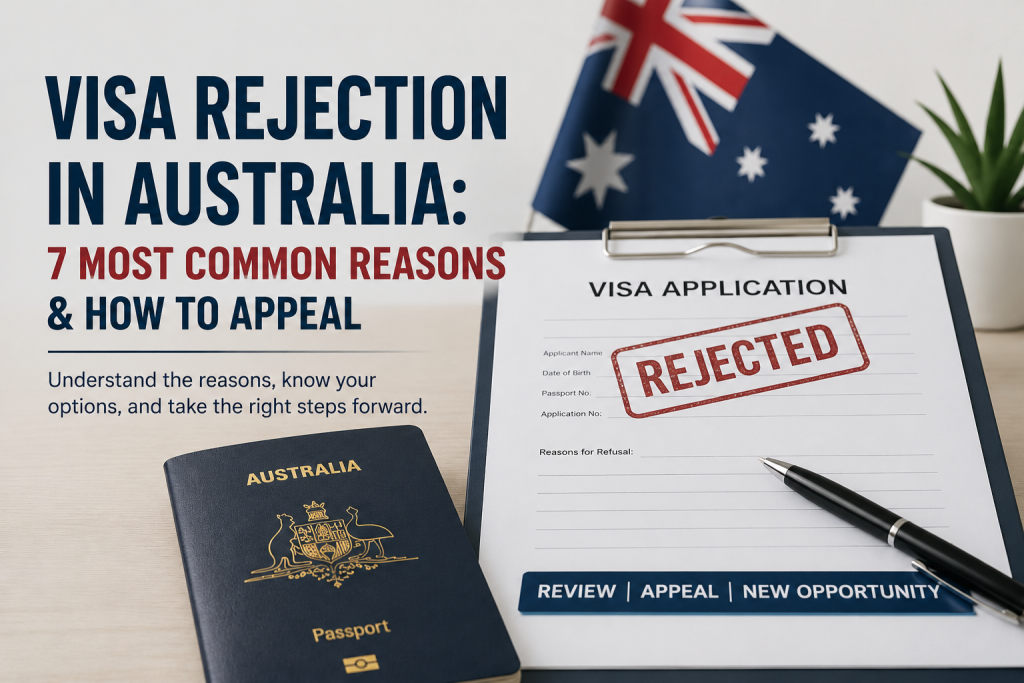
Getting a refusal letter from the Department of Home Affairs is one of those moments that knocks the wind out of you. If you’re dealing with visa rejection in Australia right now, take a breath — a “no” today doesn’t automatically mean your journey ends here. Thousands of applicants face this every year, and a good number of them go on to have their cases reviewed and even overturned. This guide walks you through why refusals happen and, more importantly, what your real options look like afterward.
Why Visa Refusals Happen More Often Than You’d Think
Australia’s immigration system has become noticeably stricter over the last couple of years. Case officers are under pressure to process huge volumes of applications while also catching anything that looks even slightly inconsistent. That combination means even genuine, well-prepared applicants sometimes get caught out by small gaps in their paperwork. Understanding Australia visa refusal patterns before you apply — or before you appeal — puts you in a much stronger position.
7 Most Common Reasons for Visa Rejection
1. Incomplete or Inconsistent Documentation
This is, by far, the number one cause of refusals across almost every visa category. Missing a signature, submitting an outdated form, or having mismatched dates between documents can be enough to trigger a rejection. Case officers don’t have time to chase up gaps — they simply act on what’s in front of them.
2. Failing the Genuine Student or Genuine Entrant Test
In applications related to educational reasons, the refusal of an Australian student visa is often associated with questions regarding the legitimacy of the candidate’s intentions. If your study plans, finances, and course selection do not match, they may be convinced that you are not really there to study.
3. Insufficient Financial Evidence
The most important warning sign is bank statements indicating a sudden appearance of a huge amount without any explanation. Officers would prefer to see consistent evidence of your savings over time rather than some money you earned unexpectedly recently.
4. Health and Character Requirements Not Met
All candidates must be medically and psychologically examined. Failure to disclose any ailment or incomplete submission of information relating to one’s criminal record could lead directly to rejection, even if it were done inadvertently.
5. Providing False or Misleading Information
Even a minor inaccuracy — like listing the wrong employment dates — can be treated as misleading information under immigration law. This is one of the more serious triggers, since it can affect future applications too.
6. Not Meeting Points or Skills Criteria
In terms of skilled migration options, failing to meet the point thresholds or work experience requirements serves as a clear-cut reason for the rejection of many applications. The applicant tends to misunderstand the evaluation criteria used.
7. Weak or Generic Supporting Statements
Whether it is a partner visa relationship statement or a study intention letter, templating your answer never impresses the case officer. They have been trained to pick out templated responses, and in most cases, the response ends up being counterproductive.
Understanding the Bigger Picture Behind Refusals
Looking at broader Australia visa rejection reasons, a pattern tends to emerge: most refusals aren’t about applicants being dishonest — they’re about applicants not presenting their case clearly enough. A strong application tells a complete, believable story from start to finish. When there are gaps, contradictions, or missing context, officers have no choice but to fill in the blanks with assumptions, and those assumptions rarely work in your favour.
What Changed: AAT Is Now the ART
As someone who has gone through previous advice on this matter, you may be familiar with the acronym AAT, or Administrative Appeals Tribunal, which used to act as the authority responsible for handling the appeals of visa refusal. The good news is that, with the reorganization of the structure in October 2024, the AAT is no longer functional – it has been replaced with the Administrative Review Tribunal (ART). Those whose cases were pending in the AAT prior to the restructuring did not have to take any action because their cases were transferred automatically to the ART.
How the Appeal Process Works Now
Once you receive a refusal letter, the clock starts ticking almost immediately. Depending on your visa type, you may have anywhere from just over a week to around a month to lodge your review application — so don’t sit on it.
Here’s what the process generally looks like:
- Read your refusal letter carefully. It lists the exact reasons your application was refused. This becomes the roadmap for your appeal.
- Lodge your application with the ART within the strict deadline for your visa category.
- Request the department’s internal file (often called T-documents). These show exactly how the original decision was made and where the gaps were identified.
- Prepare your submission. Address each refusal reason directly with new or clarified evidence — generic pleas about deserving the visa carry little weight here.
- Attend a hearing, or submit written arguments only. Some visa categories, including certain student visa reviews, are now assessed purely on paperwork rather than a face-to-face hearing.
- Wait for the Tribunal’s decision, which can take several months depending on the visa type and current caseload.
Student Visa Appeals: What Makes Them Different
A student visa appeal in Australia usually hinges on proving genuine study intent. If your original refusal centred on doubts about your commitment to studying, your appeal needs to directly counter that — updated enrolment confirmation, clearer financial documentation, and a well-written personal statement can make a real difference. Reviews for education-related refusals tend to take time, so patience really is part of the process.
When to Get Professional Help
While you’re not legally required to hire a migration agent or lawyer for an appeal, complex cases — especially those involving allegations of misleading information or character concerns — genuinely benefit from expert input. Getting proper visa rejection help in Australia early on, ideally within the first week of receiving your refusal, gives you the best shot at building a strong, well-timed case rather than scrambling close to the deadline.
Final Thoughts
A refusal letter might appear to be an end to the matter, but for some people, this is merely another stage of the journey rather than a barrier in itself. The purpose of the appeals process within Australian migration applications is that there have been cases in which case officers have made mistakes, or perhaps the applicant failed to make his best case on the first occasion. If you know what went wrong and act swiftly, you stand a good chance of reversing the decision.
Frequently Asked Questions
1. What are the most common reasons for visa rejection in Australia?
Incomplete documents, financial issues, failing eligibility requirements, or providing misleading information.
2. Can I appeal a visa refusal in Australia?
Yes. Eligible refusals can be reviewed by the Administrative Review Tribunal (ART) within the required deadline.
3. How long do I have to appeal a visa refusal?
The timeframe depends on your visa type. Check your refusal letter and act quickly.
4. What is the ART and how is it different from the AAT?
The ART replaced the AAT in October 2024 and reviews eligible visa refusal decisions.
5. Why do student visas get refused in Australia?
Common reasons include weak financial evidence, unclear study plans, and concerns about genuine study intentions.
6. Do I need a lawyer to appeal a visa refusal?
No, but professional advice can be helpful for complex or sensitive cases.
7. How long does a visa appeal take in Australia?
It varies by visa type and case. Some reviews can take many months or longer.
8. What happens if my visa appeal is unsuccessful?
Depending on your circumstances, you may have further legal or immigration options available.